
 By Olivia Wilson Media Team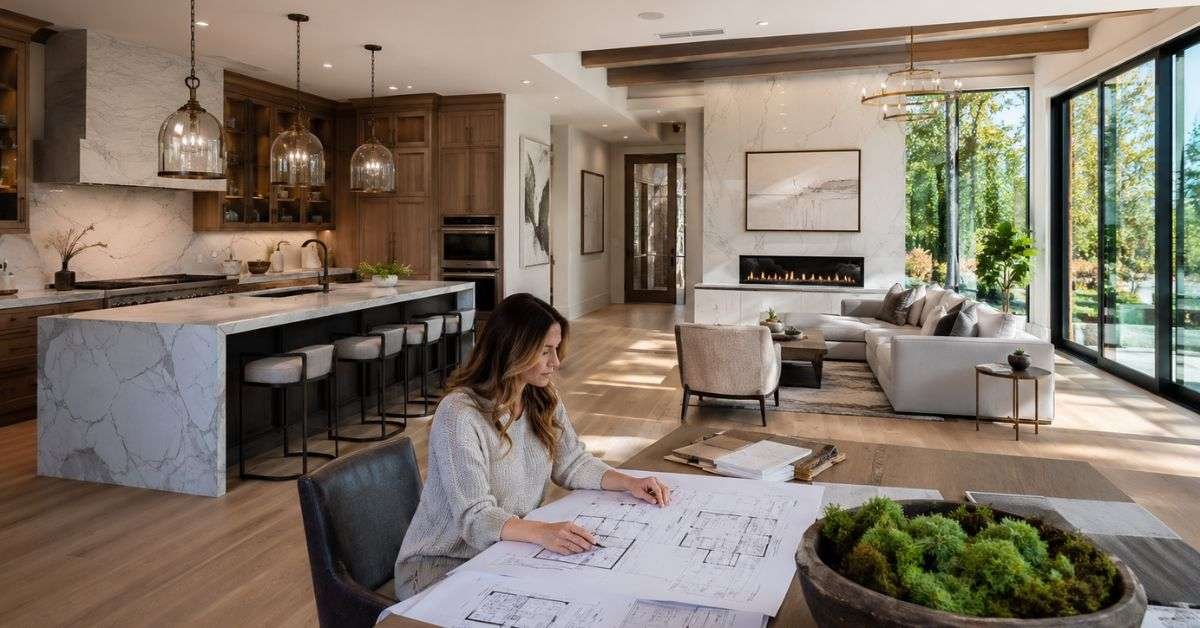
Your home is more than a building. It is the place where you relax, grow, and make memories. That is why so many homeowners today are choosing to refresh and rebuild the spaces they already live in rather than move somewhere new. Whether you are fixing a tired kitchen, opening up a cramped living room, or giving a dated bathroom a whole new feel, the right approach can turn any ordinary space into something truly special.
Interior home renovation is one of the smartest investments you can make in 2026. Costs for buying new properties have climbed significantly across most countries, which means more people are staying put and improving what they already own. The good news is that you do not need a huge budget or professional design skills to get great results. With the right plan, realistic goals, and a clear understanding of where to spend and where to save, you can create a home that feels brand new — without the stress of moving.
This guide covers everything you need to know: from planning your first project and setting a budget, to choosing materials, picking contractors, and adding the finishing touches that make a house feel like a home.
The case for updating your home has never been stronger. According to the U.S. Department of Housing and Urban Development, homeownership rates have remained high, and more families are choosing to invest in their current property rather than trade up. That shift has made home improvement one of the fastest-growing areas in the consumer economy.
Here is why so many people are choosing to renovate rather than relocate:
A well-planned refresh can add significant value to your property. Kitchens and bathrooms, in particular, tend to deliver strong returns when done properly.
Buying a new house often means living with someone else’s choices — their tiles, their cupboard colours, their layout. Renovating gives you complete control over every detail.
Improving an existing space is far more environmentally friendly than demolishing and rebuilding. Keeping the structure of your home and upgrading only the interiors reduces waste and energy use.
Many homeowners have a deep attachment to their current address — their neighbourhood, their schools, their community. Renovating lets them stay where they love while enjoying a better-quality home.
In short, a thoughtful home makeover is an investment in your comfort, your finances, and your future.

Before you buy a single tin of paint or call a single contractor, you need a plan. Poor planning is the number one reason renovation projects go over budget, take too long, or end up looking nothing like what the homeowner imagined.
Start by asking yourself three questions:
Be specific. “I want the kitchen to feel bigger and brighter” is more useful than “I want to update the kitchen.” Write down exactly what bothers you about each room and exactly what you want to feel when you walk into the finished space.
Include not just the cost of materials and labour, but a contingency fund of at least 10–15% for unexpected surprises. Older homes especially have a habit of hiding problems behind walls and under floors.
A full interior home renovation of a medium-sized house can take anywhere from three months to over a year, depending on how much work is involved and how many rooms you are tackling at once.
Once you have answers to those three questions, you can create a room-by-room priority list. Tackle spaces in a logical order — structural and utility rooms first, then kitchens and bathrooms, then bedrooms and living areas.
Budgeting is where many homeowners struggle most. It is easy to fall in love with a design idea online and forget to check whether it fits within your financial limits.
Use the table below as a rough starting point for common renovation costs in 2026 (figures are approximate and vary by location, quality of materials, and labour rates):
| Room | Basic Refresh | Mid-Range Update | Full Transformation |
|---|---|---|---|
| Living Room | $1,500–$4,000 | $5,000–$12,000 | $15,000–$30,000 |
| Kitchen | $5,000–$10,000 | $15,000–$30,000 | $40,000–$80,000 |
| Bathroom | $3,000–$7,000 | $10,000–$20,000 | $25,000–$50,000 |
| Master Bedroom | $1,000–$3,000 | $4,000–$9,000 | $12,000–$25,000 |
| Hallway/Entryway | $500–$2,000 | $3,000–$6,000 | $8,000–$15,000 |
| Home Office | $1,000–$3,000 | $4,000–$8,000 | $10,000–$20,000 |
- Get at least three quotes from different contractors before committing.
- Always ask for a written quote that breaks down labour and materials separately.
- Factor in permit fees if your project involves structural changes, electrical work, or plumbing.
- Do not forget the hidden costs: skip hire, temporary accommodation if needed, new furniture, and decor.
The style you choose for your remodel should feel like a natural extension of who you are — not a trend you copied from a magazine. That said, knowing what is popular can help you make choices that feel fresh today and will still look good in ten years.
In 2026, the most popular interior design directions include:
Clean lines and clutter-free spaces, but softened with natural textures like linen, wood, and stone. Think less “cold and clinical” and more “calm and grounded.”
Bringing nature indoors through plants, natural materials, earthy colours, and plenty of natural light. Studies from Harvard T.H. Chan School of Public Health have shown that spaces with more natural elements improve mental wellbeing and productivity.
Deep, rich colours — forest greens, navy blues, charcoal — paired with warm lighting and textured fabrics. This look has grown significantly in popularity over the last few years.
A blend of Japanese minimalism and Scandinavian functionality. Neutral palettes, low-profile furniture, and handmade-feeling pieces.
The key is consistency. Pick one direction and stick to it across all the rooms you are updating, so the home feels cohesive rather than like a series of disconnected projects.
The kitchen is consistently the room that adds the most value to a home and also the one that homeowners care most about. A well-designed kitchen can change the entire rhythm of your daily life.
When planning a kitchen upgrade, think about the “work triangle” — the relationship between your cooker, your fridge, and your sink. These three points should form a sensible triangle so you are not walking unnecessary distances while cooking.
Popular kitchen updates in 2026 include replacing cabinet doors rather than full units (a fraction of the cost), installing a new splashback in bold tiles or coloured glass, adding open shelving for a more relaxed feel, and upgrading lighting with both task lights under cupboards and decorative pendants overhead.
If a full kitchen replacement is in your budget, consider layout changes carefully. An island works well in larger kitchens but can make a small space feel cramped. A peninsula — an island attached to a wall — often works better in tighter layouts.
For sustainable choices, look at energy-efficient appliances rated A+++ and consider recycled or reclaimed materials for countertops and flooring. The Environmental Protection Agency’s ENERGY STAR programme has excellent guidance on efficient appliances that save money in the long run.
Bathrooms are often the most rewarding rooms to renovate. Even small changes — new taps, a fresh coat of paint, better lighting — can make a bathroom feel completely different.
A full bathroom overhaul typically involves replacing the suite (bath, shower, toilet, basin), retiling floors and walls, updating lighting, and improving storage. Done well, this can add meaningful value to your property and transform your daily routine.
Some key things to consider:
Moisture is a bathroom’s worst enemy. Make sure any new design includes proper ventilation — either through a window or a high-quality extractor fan — to prevent damp and mould.
Moving plumbing is expensive. If you can achieve your desired look while keeping the existing pipe locations, you will save a significant amount of money.
Bathrooms benefit from layered lighting: bright task lighting around the mirror for grooming, and softer ambient lighting for relaxing baths. Consider a heated towel rail that doubles as a radiator.
Wall-hung cabinets, recessed shelves built into the wall, and vanity units with drawers all help keep countertops clear and the space feeling organised.
Even a modest bathroom refresh — new paint, new mirror, new taps, and new accessories — can feel like a dramatically different room for a relatively small spend.
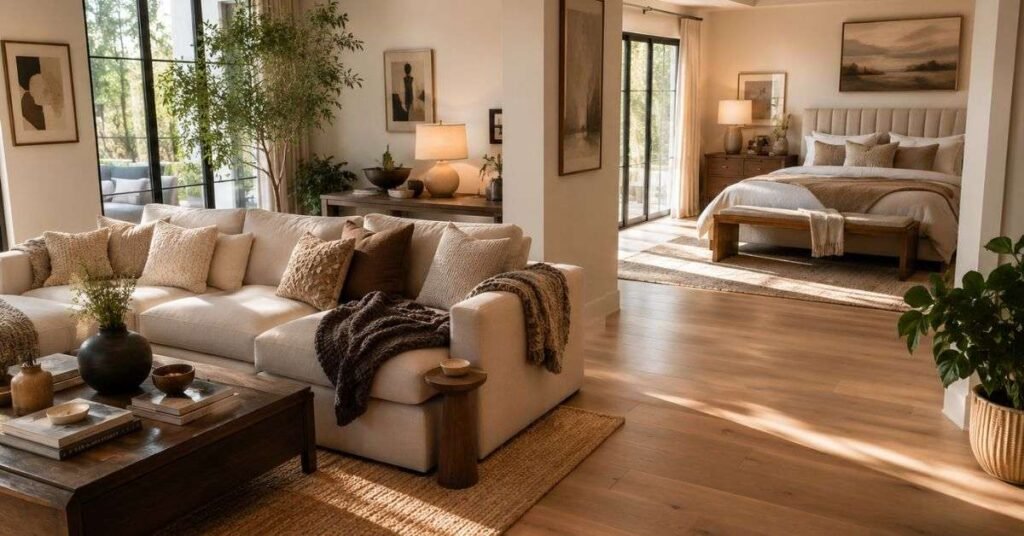
Living rooms and bedrooms are where you spend most of your time at home, which means getting them right matters enormously.
For living rooms, the single biggest change you can make is to improve the lighting. Most homes rely too heavily on a single overhead bulb. Add floor lamps, table lamps, and wall lights to create warmth and depth. Then consider wall treatments — paint, wallpaper, panelling, or a combination — to give the room character.
Furniture arrangement matters too. A common mistake is pushing all furniture against the walls. Grouping sofas and chairs slightly inward creates a more intimate, welcoming feel.
For bedrooms, blackout curtains or blinds, quality bedding, and good storage (so the room does not feel cluttered) are the three biggest quality-of-life improvements you can make. A feature wall behind the bed — painted in a deeper colour, or wallpapered with a bold pattern — instantly elevates the room without a large cost.
Both rooms benefit enormously from decluttering before any design decisions are made. It is very hard to plan a beautiful space when it is full of things that do not belong there.
Most people focus on furniture and decor when thinking about a home update, but the three surfaces that surround you — floors, walls, and ceilings — have the greatest impact on how a space looks and feels.
In 2026, engineered hardwood and luxury vinyl plank (LVP) are the most popular choices for their combination of looks, durability, and price. Natural stone tiles remain a luxury option for kitchens and bathrooms. Carpet is making a quiet comeback in bedrooms for its warmth and comfort underfoot.
Paint is the cheapest and most transformative tool you have. A single feature wall in a bold colour or a dramatic wallpaper can completely change the energy of a room. Wall panelling — wainscotting, shiplap, picture rail moulding — adds depth and texture and has been extremely popular in recent years.
The ceiling is one of the most overlooked surfaces in a room. Adding a ceiling rose and decorative cornice to a period property restores lost character. Painting the ceiling in a slightly darker tone than the walls (a technique called “colour drenching”) makes rooms feel cosier and more considered.
| Flooring Type | Average Cost per sq ft | Durability | Best For |
|---|---|---|---|
| Solid Hardwood | $8–$15 | High (refinishable) | Living rooms, bedrooms |
| Engineered Hardwood | $4–$10 | High | Most rooms incl. some wet areas |
| Luxury Vinyl Plank | $2–$7 | Very High | Kitchens, bathrooms, basements |
| Ceramic/Porcelain Tile | $3–$10 | Very High | Bathrooms, kitchens, hallways |
| Carpet | $2–$8 | Medium | Bedrooms, playrooms |
| Polished Concrete | $6–$12 | Very High | Modern/industrial spaces |
One of the biggest decisions in any home project is how much to do yourself and how much to hand over to professionals. The answer depends on your skills, your time, and the complexity of the work.
Do-it-yourself (DIY) works well for painting, tiling, flat-pack furniture assembly, basic decorating, and installing fixtures like towel rails or light switches (where regulations allow). The savings can be substantial, and for many homeowners, the sense of achievement is its own reward.
Hire a professional for structural work, anything involving load-bearing walls, electrical wiring, gas connections, plumbing, and roofing. These are areas where mistakes can be dangerous and expensive to fix.
When hiring contractors, always:
- Check their credentials and insurance before signing anything.
- Ask for references from previous clients and actually follow up on them.
- Get a written contract that specifies the scope of work, the timeline, the payment schedule, and what happens if the work is not completed on time.
- Never pay the full amount upfront. A deposit of 10–30% is standard; the remainder should be paid in stages tied to completed milestones.
The interior home renovation industry has grown significantly, which means there are both more excellent tradespeople and more people willing to cut corners. Taking your time at the hiring stage protects you at every stage that follows.
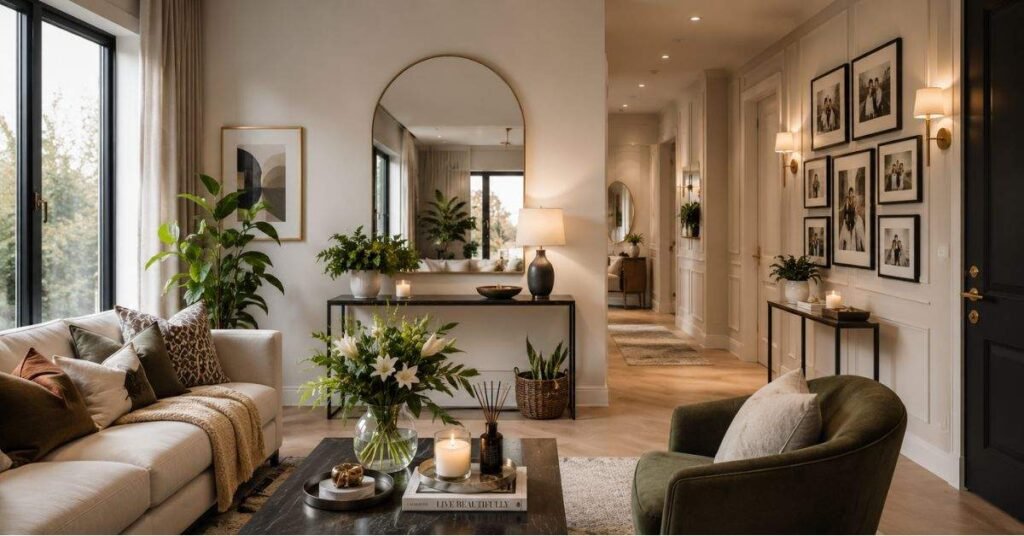
The difference between a renovation that looks “nice” and one that looks truly special almost always comes down to the finishing touches. These are the small decisions — the hardware, the lighting, the textiles, the accessories — that tell the story of who lives in the space.
Swapping out door handles, drawer pulls, tap fittings, and light switch plates for a consistent finish (brushed brass, matte black, and polished nickel are all strong choices in 2026) ties a room together more than almost anything else.
Strategically placed mirrors bounce light around a room and make spaces feel larger. An oversized mirror in a narrow hallway can double the apparent width of the space.
Real plants add life, texture, and freshness to any room. Even if you do not have a green thumb, low-maintenance options like pothos, snake plants, and ZZ plants thrive with minimal care.
It sounds obvious, but how a home smells is part of how it feels. A candle, reed diffuser, or fresh flowers can make a renovated room feel warm and welcoming the moment someone walks through the door.
Hanging meaningful artwork — whether expensive prints or personal photographs — makes a house feel inhabited and loved. A gallery wall of family photos in mismatched but coordinated frames is one of the most personal things you can add to a newly refreshed space.
Taking time over these final details is what separates a house that has been worked on from a home that has been truly transformed. And it is in these moments that you will realise the full value of your interior home renovation — not just in the money it adds to your property, but in the joy it adds to your daily life.
Below is a quick reference table to help you prioritise your home improvement projects based on impact and typical cost:
| Room | Visual Impact | Typical ROI | Recommended Priority |
|---|---|---|---|
| Kitchen | Very High | 60–80% of cost recovered | High |
| Bathroom | High | 50–70% of cost recovered | High |
| Master Bedroom | Medium-High | 40–60% | Medium |
| Living Room | High | 40–60% | Medium |
| Hallway/Entry | Medium | 30–50% | Medium |
| Home Office | Medium | 30–50% | Low–Medium |
| Basement/Loft | Variable | 50–75% (if habitable) | Depends on use |
ROI estimates based on industry data from Forbes Home and Remodeling Magazine 2025/2026 reports.
A whole-home overhaul can take anywhere from 3 months to over a year, depending on the size of your home and how many rooms you are updating simultaneously. Tackling one room at a time is slower overall but far less disruptive to daily life.
In most cases, internal work does not require planning permission. However, changes to structural walls, electrical systems, plumbing, or anything that alters the exterior of the property may need approval — always check with your local authority before starting work.
Start with the room that causes you the most daily frustration, or the one that guests see first (such as the hallway or living room). Kitchens and bathrooms are generally prioritised because they deliver the best return on investment.
DIY is suitable for decorating, painting, and simple installations. Hire a qualified professional for anything involving electricity, gas, structural changes, or complex plumbing. Safety and building regulations should always take priority over saving money.
The most common mistakes are: not planning thoroughly enough before starting, underestimating the budget, making too many changes mid-project (which drives up costs), and rushing the finishing touches. Taking time to plan well at the start saves enormous stress and money further down the road.
Renovating your home is one of the most meaningful projects you can take on. It asks for your time, your creativity, and your patience — and when it is done well, it gives back far more than it takes.
The most important thing to remember is that a great result does not come from spending the most money or following the latest trends. It comes from understanding what you want your home to feel like, making a clear plan to get there, and paying attention to the details along the way.
Whether you are starting with a single room or working your way through an entire property, approach each space with intention. Think about how you use it, who uses it with you, and what small changes might make the biggest difference to your everyday experience.
Every great interior home renovation starts the same way: with a person who decided that their home deserved better. If you are reading this, that person is you.
Whether you browse our interior home renovation tips, talk to a designer, or simply pick up a paintbrush this weekend — write down the one room in your home that frustrates you most and start planning your first project today. Your future self will be very glad you did.