
 By Olivia Wilson Media Team
If you have a damaged, broken, or discolored front tooth, your dentist may recommend placing a crown on front tooth to fix it. This is one of the most common dental procedures done today — and for good reason. Front teeth are the first thing people notice when you smile. So when one of them is cracked, worn down, or badly damaged, it affects both your confidence and your ability to eat and speak comfortably.
A dental crown is like a small cap that fits over your natural tooth. It protects it, strengthens it, and makes it look natural again. But many people have questions before going through with it: Will it look real? How long does it last? Does it hurt? Is it worth the cost?
This guide answers all of those questions in a simple and clear way. Whether you are considering this treatment for yourself or just want to learn more about it, this article gives you everything you need — from what the procedure looks like, to the materials used, to how to care for your new tooth. Let’s start from the beginning.
A dental crown is a tooth-shaped cap that is placed over a damaged or weak tooth. It covers the entire visible part of the tooth — from the gum line up. Once placed, it looks, feels, and works just like a natural tooth.
Front teeth, also called anterior teeth, are the ones you see when you smile. Because they are so visible, dentists take extra care when working on them. A crown on these teeth must not only be strong — it must also look completely natural.
- The tooth is cracked or broken
- A large filling has weakened the tooth
- The tooth is badly discolored and cannot be whitened
- There is significant decay that cannot be fixed with a filling
- The tooth was injured in an accident
- After a root canal treatment on a front tooth
- To improve the overall appearance of the smile
According to the American Dental Association, dental crowns are one of the most frequently performed restorative procedures in the United States. They are safe, long-lasting, and highly effective when done correctly by a trained dentist.
One of the biggest decisions you and your dentist will make is what material to use. Since front teeth are so visible, the material matters a lot — both for looks and for strength.
Here are the most common materials used:
This is the most popular choice for front teeth. Porcelain looks the most like a real tooth and matches the color of surrounding teeth very well. It is a great option for people who want the most natural appearance.
Zirconia is very strong and looks good too. It is becoming more popular as the material has improved over the years. Modern zirconia can be made to look almost as natural as porcelain.
This type has a metal base with a porcelain coating on the outside. It is strong but sometimes a dark line can appear at the gum line as you get older. It is less popular for front teeth now because of this issue.
This is a tooth-colored plastic material. It is less durable than ceramic but can be used in some cases, especially as a temporary solution.
For most people getting a crown on front tooth, porcelain or zirconia is the best option because they look the most natural and are long-lasting.
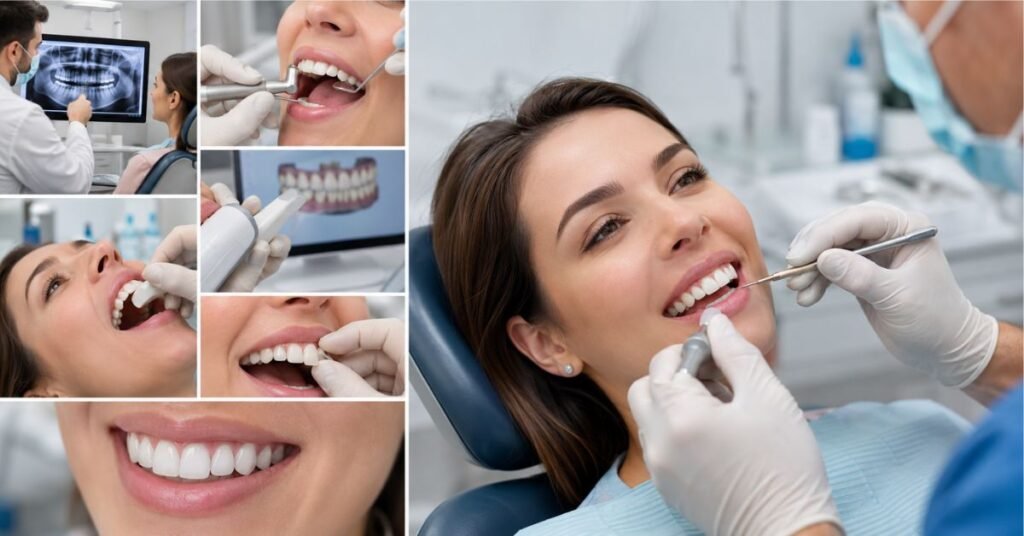
Many people are nervous about dental procedures. But knowing what to expect can make a big difference. Here is a simple breakdown of how the process works:
Your dentist examines the tooth, takes X-rays, and decides if a crown is the right solution.
The dentist numbs the area with local anesthesia. Then they reshape the tooth to make room for the crown. A small amount of the outer layer is removed.
The dentist takes a mold (impression) of your tooth. This is sent to a dental lab where your custom crown is made. In some modern clinics, digital scanning is used instead of traditional molds.
While you wait for the permanent crown (usually 1–2 weeks), a temporary one is placed on your tooth to protect it.
When the crown is ready, you come back for a second visit. The dentist removes the temporary crown, checks the fit and color, makes adjustments, and then cements the permanent one in place.
The whole process is generally painless because of the anesthesia. Some mild soreness afterward is normal and usually goes away in a day or two.
One common concern is durability. After all, front teeth are used for biting and speaking every day.
Modern dental crowns, especially those made from zirconia or high-quality porcelain, are extremely strong. They can handle the regular forces of chewing and biting without problems. However, they are not indestructible.
- Material used – Zirconia is stronger than regular porcelain
- Your bite – If your bite puts too much pressure on the crown, it can chip or crack
- Oral habits – Biting nails, chewing ice, or grinding teeth can damage crowns
- Dental hygiene – Keeping the area clean prevents decay under the crown
- Dentist skill – A well-fitted crown lasts much longer
According to a study published by the National Institute of Dental and Craniofacial Research (NIDCR), dental crowns can last anywhere from 10 to 30 years when properly cared for. Some patients have kept their crowns for even longer.
Cost is a real concern for most people. The price of a crown on front tooth varies depending on several factors.
| Material | Average Cost (Per Tooth) | Lifespan |
|---|---|---|
| Porcelain (All-Ceramic) | $1,000 – $1,800 | 10–20 years |
| Zirconia | $1,200 – $2,000 | 15–30 years |
| Porcelain-Fused-to-Metal | $800 – $1,400 | 10–15 years |
| Composite Resin (Temporary) | $300 – $700 | 1–5 years |
| Same-Day CEREC Crown | $1,200 – $2,500 | 10–20 years |
| Factor | Impact on Cost |
|---|---|
| Location (city vs. rural) | High in big cities |
| Dentist’s experience | More experience = higher cost |
| Dental insurance coverage | Can reduce cost by 30–50% |
| Need for root canal first | Adds $700–$1,500 extra |
| Lab fees | Custom labs = higher quality but more costly |
Many dental insurance plans cover a portion of crown costs, especially if the crown is medically necessary. Always check with your insurance provider before beginning treatment. You can also look into dental savings plans or payment plans offered by dental offices.
Longevity is one of the most important things people want to know. The good news is that a well-placed crown can last a very long time.
Most porcelain or zirconia crowns last between 10 and 20 years on average. With excellent care and regular dental checkups, some can last 25–30 years.
Here are some tips to help your crown last as long as possible:
- Brush twice a day with a soft-bristled toothbrush
- Floss daily, especially around the crowned tooth
- Avoid hard foods like ice, hard candy, or very tough meats
- Wear a night guard if you grind your teeth while sleeping
- Visit your dentist every six months for a cleaning and checkup
- Do not use your teeth as tools (to open bottles, tear packaging, etc.)
The crown itself does not decay, but the tooth underneath still can. That is why cleaning the area where the crown meets the gum is very important.
Like any dental treatment, crowns come with a small number of potential issues. Most are minor and manageable, but it is good to know about them.
Some people experience sensitivity to hot and cold temperatures right after getting a crown. This usually goes away within a few weeks.
If the cement weakens or the crown was not placed properly, it can loosen. This is not common but can happen. If it does, keep the crown safe and contact your dentist right away.
Porcelain crowns can chip if you bite something too hard. Small chips can sometimes be repaired. Large ones may require a replacement.
If bacteria gets in where the crown meets the gum, the tooth underneath can decay. Good oral hygiene prevents this.
Sometimes the color of the crown does not match the surrounding teeth perfectly. A skilled dentist and a good dental lab reduce this risk significantly.
Occasionally, the gums around the crowned tooth may become sore or slightly recede over time.
Sometimes people wonder whether a crown is really necessary, or if there are other choices.
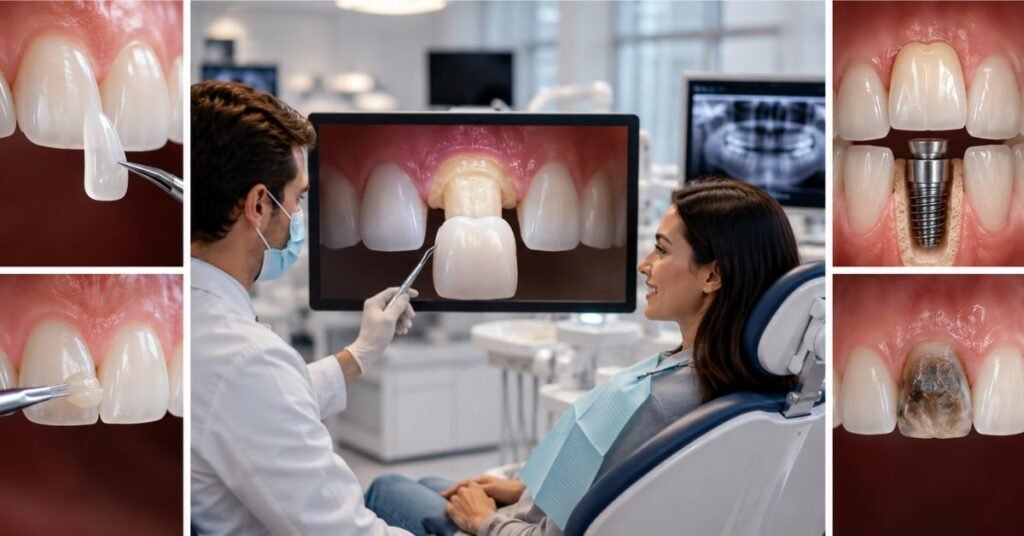
Here is a quick comparison of options:
Veneers are thin shells placed on the front surface of the tooth. They are a great cosmetic option for minor discoloration or chips. However, they do not work when the tooth is severely damaged or structurally weak.
Composite resin is applied directly to the tooth to reshape or cover it. This is a quick, affordable option but is not as durable or long-lasting.
If the tooth is too damaged to save, it may need to be removed and replaced with an implant. An implant is a titanium post placed into the jawbone, with a crown placed on top.
Leaving a damaged tooth untreated can lead to infection, pain, and further damage. This is rarely a good choice.
A crown on front tooth is often the best option when the tooth is structurally compromised but still has a healthy root system underneath.
Technology has changed the way dental crowns are made. In many modern dental offices, you can now get a crown made and placed in a single visit using a technology called CEREC (Chairside Economical Restoration of Esthetic Ceramics).
- The dentist scans your tooth digitally — no messy impressions needed
- A computer designs the crown based on the scan
- A milling machine carves the crown from a ceramic block — right in the office
- The crown is polished and placed on the same day
- Only one dental visit needed
- No temporary crown required
- Very accurate fit
- Fast results
- Slightly higher cost in some clinics
- Not all dentists offer this technology
- Color matching may be slightly less precise in some cases
Same-day crowns are becoming more and more common and are a great option for busy people who want to minimize dental visits. According to the Academy of General Dentistry, CEREC crowns have a success rate similar to traditional lab-made crowns.
Once your new crown is placed, taking care of it properly is the key to making it last.
Here is a simple care routine to follow:
- Avoid sticky or hard foods
- Be gentle when eating on that side
- Do not apply too much pressure on the new crown
- Brush your teeth twice a day — include the crowned tooth
- Use fluoride toothpaste
- Floss once a day, gently around the crown
- Use mouthwash to reduce bacteria
- Go for a checkup every 6 months
- Tell your dentist if the crown feels loose or you feel pain
- Ask about a night guard if you grind your teeth
If you notice any sudden pain, swelling, or your crown feels different when biting, contact your dentist promptly. Early attention usually means an easy fix.
No, the procedure is done with local anesthesia, so you should not feel pain. Mild soreness afterward is normal and typically goes away within 1–2 days.
Yes, porcelain and zirconia crowns can be matched to the exact color and shape of your surrounding teeth, making them look very natural.
If the damage is small, a filling may work. But if the tooth is cracked, severely decayed, or structurally weak, a crown is usually the better and longer-lasting choice.
Many plans cover part of the cost, especially if the crown is medically necessary. Coverage is usually 50% after the deductible. Always verify with your insurance provider first.
The crown itself cannot get a cavity, but the natural tooth underneath can. Bacteria can enter where the crown meets the gum, so brushing and flossing in that area is very important.
Getting a crown on front tooth is a smart and effective solution when your tooth is damaged, weak, or severely discolored. Modern dental materials like porcelain and zirconia make it possible to restore your tooth in a way that looks completely natural and lasts for many years. The procedure is straightforward, mostly painless, and well worth it when you consider how much your front teeth affect your smile and confidence.
The key is to choose an experienced dentist, select the right material for your situation, and take proper care of your crown afterward. With good habits and regular dental visits, your restored tooth can serve you well for 15 to 30 years or even longer.
If you are unsure whether a crown is the right choice for you, the best first step is to schedule a consultation with your dentist. They can examine your tooth, explain your options, and help you make the best decision for your oral health and budget.