
 By Olivia Wilson Media Team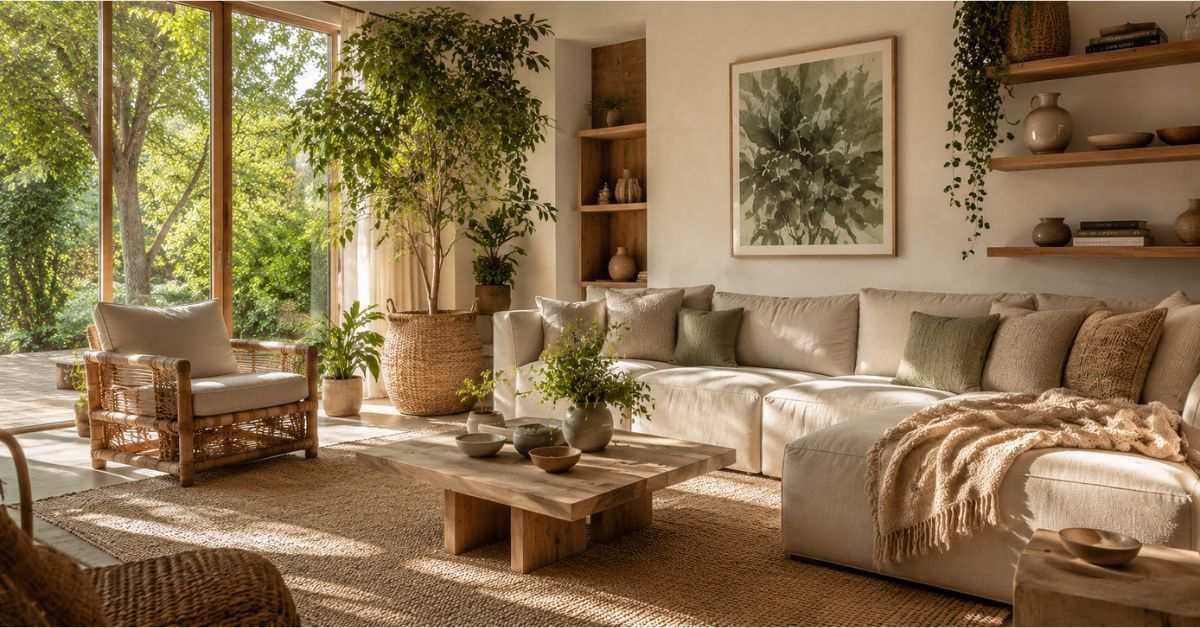
Have you ever walked into a room filled with plants, natural light, and wood textures and instantly felt calmer and happier? That feeling is not random. It is backed by science. Humans are wired to connect with nature. When we bring natural elements into our homes and workspaces, our minds and bodies naturally feel more relaxed and refreshed.
This is the core idea behind biophilic interior design a style of decorating and planning spaces that puts nature at the center of everything. Instead of just placing a plant in the corner of a room, this approach thoughtfully weaves nature into the walls, furniture, lighting, textures, and layout of a space.
In this guide, you will learn everything you need to know from the basic ideas and science behind nature-inspired interiors to practical tips you can use right now in your own home. Whether you are redecorating a living room, building a new office, or just curious about this growing design trend, this article will give you clear, honest, and useful information.
Let’s start.
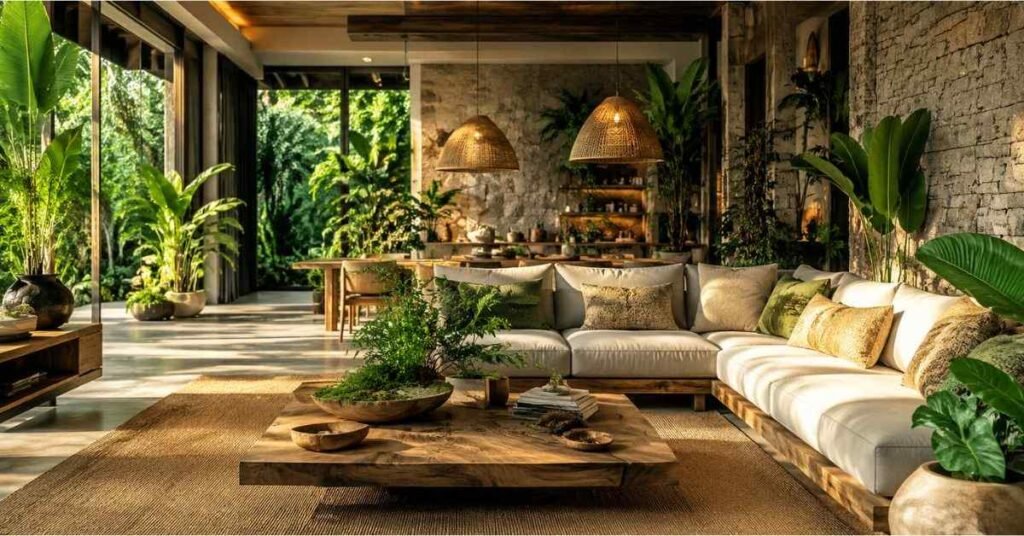
Biophilic interior design is the practice of designing indoor spaces so that people feel connected to the natural world, even when they are inside. The word biophilic comes from the Greek words bios (life) and philia (love). So, biophilic literally means love of life or love of nature.
This design approach goes beyond simply adding a houseplant to your shelf. It is more than a decorating trend. It is a design philosophy that includes:
Natural materials like wood, stone, bamboo, and clay
Natural light through large windows, skylights, and sun tubes
Water features like indoor fountains or aquariums
Green walls and living plants placed throughout a space
Nature-inspired patterns like leaf prints, organic shapes, and earthy colors
Views of the outdoors and connections to outside environments
Fresh air and good ventilation that mimics outdoor breezes
The idea gained major attention in the 1980s by biologist Edward O. Wilson. He proposed that humans have a natural, genetic need to connect with other living things. Since then, architects, interior designers, and scientists have built on this idea to create spaces that genuinely improve how people feel.
Today in 2026, this approach is used in homes, offices, schools, hospitals, and hotels around the world. It is not just a trend it is becoming a standard in smart, human-centered design.
You might wonder: does being around nature actually change how we feel? The short answer is yes and there is strong research to back it up.
Studies from universities and health organizations have shown that spending time in or near natural environments reduces stress hormones like cortisol. A 2015 study from Stanford University found that people who walked in a natural setting showed lower levels of anxiety compared to those who walked in urban environments.
NASA research has also shown that certain indoor plants can help improve air quality by removing toxins like benzene and formaldehyde. While the scale of this effect in homes is still debated, having greenery around clearly makes people feel better emotionally.
According to the World Health Organization (WHO) indoor environments affect human health more than most people realize especially since modern people spend around 90% of their time indoors. Poor lighting, bad air quality, and disconnection from nature can all contribute to mental fatigue, low mood, and reduced productivity.
On the other hand, spaces designed with nature in mind have been shown to:
- Reduce stress and anxiety
- Improve focus and creativity
- Speed up physical recovery (as seen in hospital settings)
- Improve sleep quality
- Increase feelings of happiness and contentment
That is why many designers and architects are now creating spaces that feel more connected to the natural world. a more thoughtful, nature-centered approach to creating spaces where people live and work.
To truly understand nature-integrated design, it helps to break it down into three main categories. These are accepted by most experts in the field:
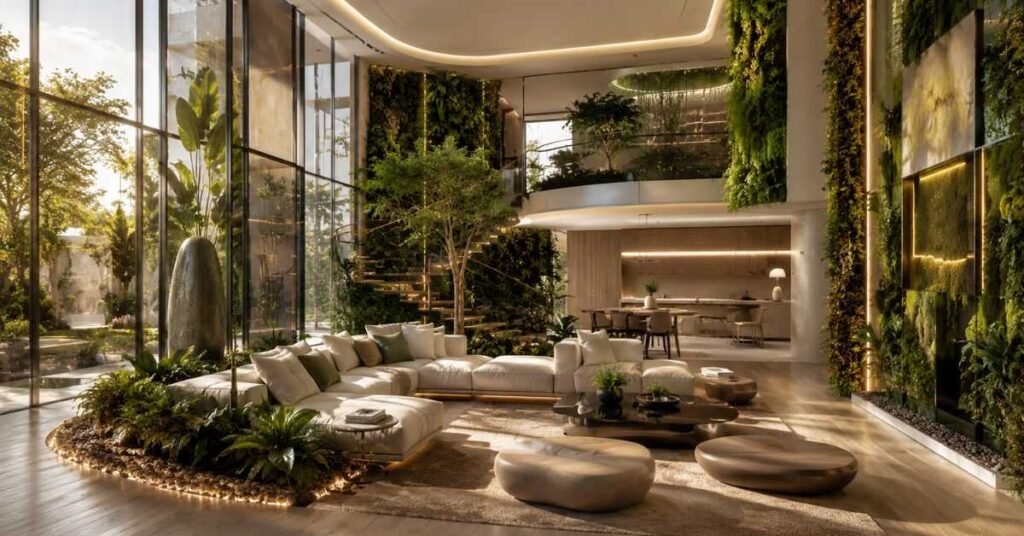
This includes direct contact with nature through plants, water, animals, fresh air, and natural light. Think of a room with floor-to-ceiling windows that let sunlight pour in, or an office lobby with a living green wall covered in ferns and moss.
These are materials, colors, and patterns that mimic or reference nature without using actual natural elements. Examples include wood grain textures on furniture, leaf patterns on wallpaper, stone-look floor tiles, or organic shapes in furniture design.
This refers to spatial design that creates rooms that feel like natural environments. For example, designing spaces that have a sense of refuge (cozy, enclosed spaces like a reading nook) or prospect (open spaces with long views, like a room that overlooks a garden).
All three categories work together. The most successful nature-inspired interiors combine all three rather than relying on just one.
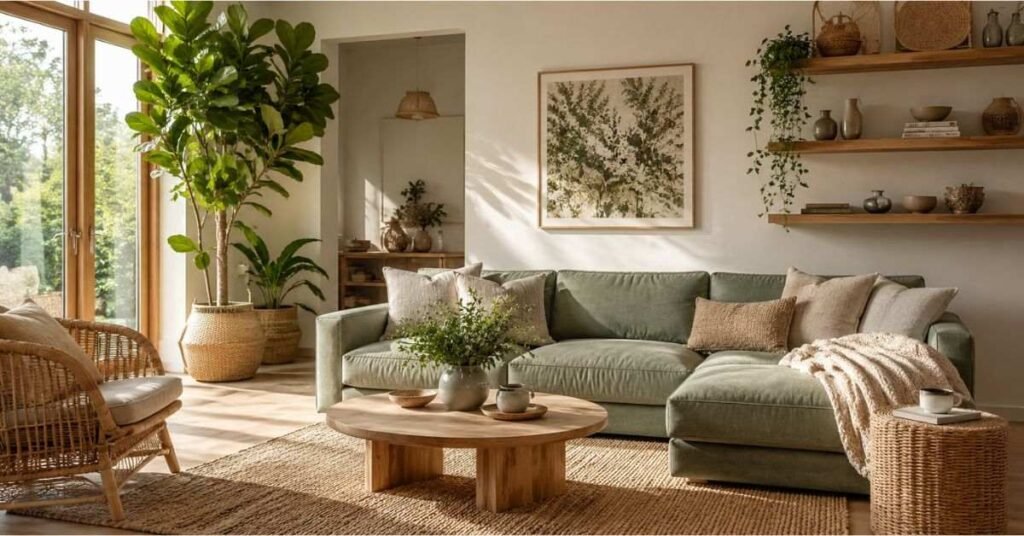
The living room is often the heart of a home. It is where families gather, guests are welcomed, and people relax after long days. This makes it one of the best places to apply nature-centered design principles.
Biophilic interior design in a living room can look like this:
- A large sofa in earthy tones like terracotta, sage green, or warm beige
- A natural wood coffee table with organic, curved edges
- A cluster of indoor plants in different sizes from tall fiddle leaf figs to small succulents
- Linen or cotton cushion covers in natural tones
- Woven rattan baskets for storage
- A large window with sheer curtains to maximize natural light
- Stone or ceramic decorative elements
- A small tabletop water fountain for ambient sound
You do not need to fill every corner with plants to make the space feel natural. It is about creating a calm, grounded feeling that reminds you of the outdoors even when you are safely inside.
Colors that work well for this space include warm whites, clay reds, forest greens, sandy yellows, and deep ocean blues. These are colors you would naturally find in forests, deserts, rivers, and skies.
A bedroom should be a place of rest and calm. Nature-inspired design principles are especially powerful here because they help lower stress and improve sleep quality.
Here are some simple ideas:
Organic cotton or linen sheets breathe better and feel softer
Lavender, snake plants, and peace lilies are known to improve air quality and promote relaxation
A solid wood bed frame or nightstand adds warmth and groundedness
Mimic the natural shift from daylight to evening light by using warm-toned bulbs
Jute rugs, woven throws, and stone-look lamp bases all add a natural feel
Avoid harsh overhead lighting and synthetic materials where possible. The idea is to make the bedroom feel like a comfortable and peaceful, almost like a quiet getaway from daily stress. or near a quiet river.
If you have a window with a garden or park view, make the most of it. Keep curtains light and open during the day so nature views can be a visual anchor throughout the room.
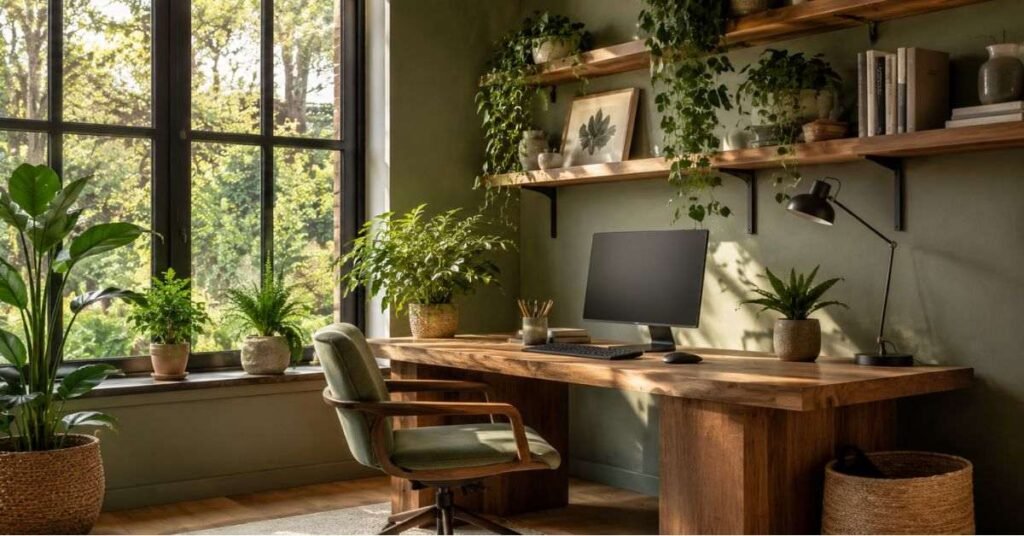
Since the pandemic years, more people are working from home. This has made home office design more important than ever. to design thoughtfully.
Research by the Human Spaces Report (published by Interface and the University of Exeter) found that workers in offices with natural elements reported a 15% higher level of well-being and a 6% increase in productivity compared to those in spaces with no natural features.
For a home office, try:
- Placing your desk near a window so you get natural light while you work
- Adding a medium-sized plant to your desk or bookshelf (pothos, ZZ plants, and spider plants are low-maintenance)
- Using a wooden desk or shelf instead of plastic or metal
- Choosing wall colors like soft green, warm grey, or light blue
- Playing ambient nature sounds (birds, rain, streams) through a speaker if you cannot open a window
Even small changes like a wooden pen holder or a nature print on the wall can shift the energy of a workspace.
One of the most important parts of nature-centered interior design is choosing materials that are not only beautiful but also kind to the environment. After all, decorating with nature but harming the planet in the process would not make much sense.
Here are some sustainable material options to look for:
| Material | Why It’s Great | Where to Use It |
|---|---|---|
| Bamboo | Fast-growing and renewable | Flooring, furniture, blinds |
| Reclaimed Wood | Reduces deforestation | Tables, shelves, wall panels |
| Natural Stone | Durable and timeless | Countertops, floors, feature walls |
| Cork | Biodegradable and insulating | Flooring, pin boards, accessories |
| Organic Cotton/Linen | Grown without harsh chemicals | Bedding, cushions, curtains |
| Recycled Glass | Reduces landfill waste | Vases, tiles, decorative pieces |
| Clay/Terracotta | Natural and non-toxic | Pots, tiles, decorative objects |
When shopping for furniture or décor, look for certifications like FSC (Forest Stewardship Council) for wood or GOTS (Global Organic Textile Standard) for fabrics. These labels tell you that the material was made in a responsible way.
Color is one of the most powerful tools in interior design. Colors quietly influence how a room feels and how comfortable you feel inside it. In nature-inspired interiors, color palettes are drawn from the natural world.
Here is a simple guide to nature-based color palettes:
| Palette Name | Key Colors | Mood It Creates |
|---|---|---|
| Forest Retreat | Deep green, brown, cream | Calm, grounded, peaceful |
| Desert Glow | Terracotta, sand, warm orange | Warm, energizing, earthy |
| Ocean Breeze | Soft blue, white, driftwood grey | Fresh, serene, open |
| Meadow Morning | Sage green, soft yellow, ivory | Light, cheerful, refreshing |
| Mountain Stone | Charcoal, taupe, slate, warm white | Sophisticated, stable, clean |
You do not need to repaint your entire home to use these palettes. Even choosing cushions, rugs, or artwork in these tones can shift the feel of a space. Combine two or three shades from the same palette for a cohesive, natural-feeling room.
Even with the best intentions, many people make small errors when trying to create a nature-inspired space. Here are the most common ones and how to avoid them:
More plants are not always better. A space crammed with plants can feel overwhelming and hard to maintain. Start with three to five plants in a room and grow from there.
Plants and natural materials look best in natural light. If your room gets very little sunlight, prioritize window treatments that maximize what light you do have, rather than heavy curtains or dark paint.
Wood, stone, rattan, jute, and linen all work together but using too many at once can make a space feel chaotic. Choose two or three textures as your main theme.
True nature-inspired design considers the air you breathe. Open windows regularly, use an air purifier, and choose low-VOC paints and finishes to keep air clean.
Plastic plants may seem like an easy solution, but they do not bring the same emotional or environmental benefits as real plants. If you struggle to keep plants alive, start with low-maintenance options like succulents or snake plants.
In 2026, the interest in nature-connected spaces is stronger than ever. Several exciting trends are shaping the future of this design philosophy:
Technology is now being used to support nature-inspired living. Smart lighting systems can mimic the natural arc of sunlight throughout the day, shifting from cool morning light to warm evening tones automatically.
Preserved moss panels and living vertical gardens are becoming popular not just in commercial spaces but in homes too. They are beautiful, require little maintenance, and add a stunning natural element to any wall.
Designers are now experimenting with materials made from mushroom roots (mycelium) algae, and other biological sources. These materials are sustainable, biodegradable, and genuinely futuristic.
Architects and designers are collaborating more closely with psychologists to create spaces that specifically target stress, anxiety, and burnout. Biophilic interior design is at the center of this movement.
In dense cities where green space is limited, building designs now often include rooftop gardens, indoor courtyards, and nature corridors to give residents some form of natural connection daily.
It is clear that people now want spaces that feel healthier, calmer, and more connected to the natural world. grounded, and connected to the living world around us.
| Room | Best Plants | Light Needed |
|---|---|---|
| Living Room | Fiddle Leaf Fig, Monstera | Bright indirect light |
| Bedroom | Lavender, Snake Plant | Low to medium light |
| Home Office | Pothos, ZZ Plant | Low to medium light |
| Kitchen | Herbs (Basil, Mint) | Bright direct light |
| Bathroom | Peace Lily, Fern | Low light, high humidity |
| Element | Benefit | Difficulty Level |
|---|---|---|
| Natural Light | Boosts mood and energy | Easy (maximize windows) |
| Indoor Plants | Reduces stress, improves air | Easy to Medium |
| Water Features | Lowers anxiety, adds calm sound | Medium |
| Natural Materials | Adds warmth and texture | Easy |
| Nature Views | Improves focus and mood | Easy (arrange furniture) |
| Living Green Walls | Visual impact, air quality | Medium to Hard |
No you can start small with a few plants, natural textiles, or rearranging furniture to maximize natural light, all without spending a lot.
Absolutely. Even in a tiny apartment, you can add a few plants, use natural color palettes, and choose furniture with wood or rattan textures to bring nature in.
There is no set number, but starting with three to five plants in a room is a good balance that feels natural without feeling cluttered.
You can use full-spectrum LED bulbs that mimic natural sunlight, choose low-light plants, and use mirrors to reflect and spread the light you do have.
Yes nature-inspired elements like soft greens, wooden toys, and nature prints are calming and stimulating for children’s development at the same time.
Connecting with nature is not a luxury it is a human need. And you do not need to move to the countryside to feel that connection. With the right choices in color, materials, light, and greenery, any indoor space can become a calming, healthy, and beautiful place to live.
Biophilic interior design is not about following a strict set of rules. It is about paying attention to how your space makes you feel and making thoughtful choices that bring more life, warmth, and calm into your environment. Even one small step like adding a new plant a wooden lamp, or a nature-inspired paint color can begin to shift the energy of a room.
Start where you are. Use what you have. Add one natural element at a time. Before long, you will have a home that feels like a quiet retreat from the busy world outside.