
 By Olivia Wilson Media Team
The first time I traveled alone, I packed three times, repacked twice, and still showed up at the airport with the wrong adapter and no idea which terminal I needed.
Nobody warned me about half the things that actually matter when you travel solo for the first time. The internet was full of vague advice like “be confident” and “trust your gut” — which sounds great until you’re standing alone in an unfamiliar train station at midnight wondering which bus goes to your hostel.
This guide is different. These are solo travel tips for first timers that are specific, honest, and actually useful. Whether you’re heading to a nearby city or crossing continents alone for the first time, this is what you genuinely need to know before you go.
Your first solo trip is not the time to book a remote jungle retreat with no wifi and unpredictable transport. Choose somewhere that’s welcoming to solo travelers, easy to navigate, and has reliable infrastructure.
- Cities with strong public transport systems
- Countries with low language barriers or widely spoken English
- Places with established backpacker or solo traveler communities
- Destinations with 24-hour services and easy airport connections
| Destination | Why It Works |
|---|---|
| Lisbon, Portugal | Safe, affordable, English friendly |
| Bangkok, Thailand | Solo traveler infrastructure, budget friendly |
| Tokyo, Japan | Extremely safe, easy transport |
| Krakow, Poland | Affordable, walkable, welcoming |
| Bali, Indonesia | Huge solo traveler community |
| Edinburgh, Scotland | English speaking, compact, cultural |
The goal of your first trip is to build confidence. Pick somewhere that sets you up to succeed, not somewhere that tests your limits before you even know what your limits are.
First timers usually make one of two mistakes. They either over-plan every hour of every day, leaving no room to breathe or explore freely. Or they under-plan completely, arriving with no accommodation booked and no idea what to do next.
The sweet spot is somewhere in the middle.
- Flights (obviously)
- First night accommodation (minimum)
- Airport to hotel transport
- Any time-sensitive activities (popular tours, museums)
- Days 3 onward accommodation
- Daily itinerary
- Food and local exploration
- How long you stay in each area
Having your first night sorted removes the biggest stress of arriving somewhere new alone. After that, give yourself permission to figure things out as you go. That’s actually where the best solo travel experiences come from.
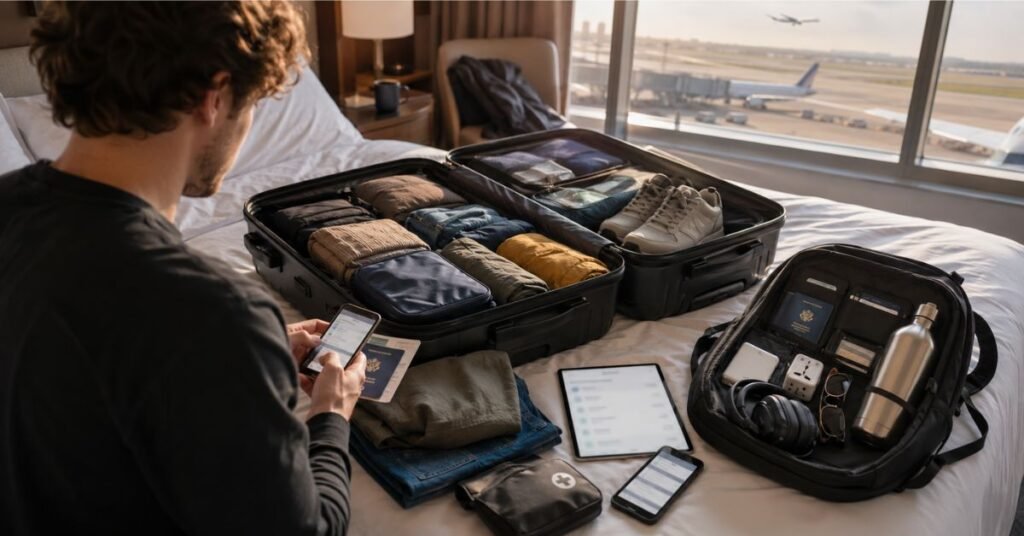
When you travel with others, someone else can watch your bag while you use the bathroom. Someone can carry the heavy stuff. Someone can run back to the hotel for the thing you forgot.
Solo means everything is on you. Literally.
- Pack half of what you think you need
- Choose a bag you can carry comfortably for 20 minutes straight
- Keep your essentials in a daypack you never check in
- Always have one complete outfit in your carry on
- Pack a small first aid kit — blisters, headaches, and stomach issues happen
| Item | Why |
|---|---|
| Passport and copies | Lost bags happen |
| Phone charger and adapter | Non negotiable |
| One day’s medication | Checked bags get delayed |
| Emergency cash | Cards fail sometimes |
| Portable charger | Lifesaver in transit |
| Snacks | Airports are expensive |
One of the most practical solo travel tips for first timers: photograph every important document before you leave. Passport, insurance, booking confirmations. Store them in your email and cloud so you can access them from any device anywhere.
Solo travel is statistically safe. Millions of people travel alone every year without incident. But safety doesn’t happen by accident — it comes from developing smart habits that become second nature.
- Tell someone at home your rough itinerary
- Share your location with a trusted person via phone
- Know where your country’s embassy or consulate is
- Keep a backup of emergency contacts written down (not just in your phone)
- Trust your instincts — if something feels wrong, leave
- Always use the deadbolt and chain lock
- Don’t share your room number with strangers
- Use the in-room safe for passport and extra cash
- Read the emergency exit information when you arrive
The goal isn’t to be paranoid. It’s to be prepared. There’s a big difference. Most solo travelers will tell you that after the first two days, safety concerns fade into the background because you realize most places are far more welcoming than the headlines suggest.
Nobody is there to spot you if your card gets declined. Nobody can lend you cash if your wallet gets lost. As a solo traveler, your financial backup plan is entirely your own responsibility.
- Carry two cards from different banks
- Keep emergency cash separate from your wallet
- Use a travel card with no foreign transaction fees
- Notify your bank before traveling internationally
- Know how to do an emergency wire transfer if needed
| Category | Budget Option | Mid Range |
|---|---|---|
| Accommodation | $20/night hostel | $60/night hotel |
| Food | $15/day local food | $40/day mixed |
| Transport | $10/day public | $25/day mixed |
| Activities | $10/day free/cheap | $30/day paid |
| Emergency fund | $200 minimum | $400 recommended |
Always have more money than you think you’ll need. Not dramatically more — but a buffer. Things go wrong. Flights get cancelled. You fall in love with a city and stay an extra day. Having financial flexibility is what makes solo travel enjoyable rather than stressful.
Where you stay as a solo traveler shapes your entire trip. This is especially true on your first solo journey when meeting people and feeling connected matters more than you might expect.
- Hostels with common areas — Best for meeting people, budget friendly
- Boutique guesthouses — Middle ground, often run by locals
- Solo-friendly hotels — Some hotels now offer single room rates without the single supplement
- Homestays — Cultural immersion, great for language practice
- Reviews specifically mentioning solo travelers
- Common areas, kitchens, or organized social events
- Central location to reduce late night transport
- 24-hour reception for late arrivals
- Lockers if staying in a dorm
One underrated solo travel tip for first timers: read hostel reviews for mentions of the “vibe.” Some hostels are party focused. Others are quiet and chill. Neither is wrong — but knowing which type you’re walking into matters.
One of the biggest fears first time solo travelers have is loneliness. And yes, there are quiet moments. But solo travel is also one of the easiest ways to meet interesting people from all over the world — if you know how.
- Sit at shared tables in restaurants and hostels
- Join free walking tours (great for meeting other travelers)
- Take a cooking class or group activity
- Use apps like Meetup or Couchsurfing events (not for staying — for meetups)
- Talk to hostel staff — they know everyone passing through
- Where have you just come from?
- Any recommendations for food around here?
- How long are you traveling for?
You don’t need to force friendships. Some of the best solo travel connections happen naturally over a shared meal or a long train journey. Be open, be friendly, and let things unfold without pressure.
Nobody talks about this enough. Solo travel is incredible — and it also has hard moments. A rainy afternoon when you’re sick in a foreign hostel. A beautiful sunset you wish you could share with someone. A day when everything goes wrong and there’s nobody to help you laugh about it.
- Let yourself feel it — it’s normal and it passes
- Call or video chat with someone from home
- Write about it — journaling helps process emotions
- Do something familiar — watch a comfort show, eat familiar food
- Get outside and walk — movement always helps
The hard moments in solo travel are also the ones that build real confidence. Every time you solve a problem alone, navigate something unfamiliar, or push through a difficult day — you come out the other side knowing yourself better.
That’s something no group trip can give you in quite the same way.
Being connected is essential for safety and navigation. But staring at your phone all day means missing the actual trip.
- Buy a local SIM card on arrival (cheaper than roaming)
- Download offline maps before you leave wifi (Google Maps works offline)
- Download translation apps for offline use
- Use wifi calling to stay in touch without international charges
- Set specific check-in times with people at home rather than constant contact
| App | Purpose |
|---|---|
| Google Maps offline | Navigation without data |
| Google Translate | Communication anywhere |
| XE Currency | Real time exchange rates |
| TripIt | Trip organization |
| Free international calls | |
| iOverlander | Community travel tips |
The goal is to be reachable when it matters and present when it counts. Download what you need before you leave wifi, then put the phone in your pocket and actually look at where you are.
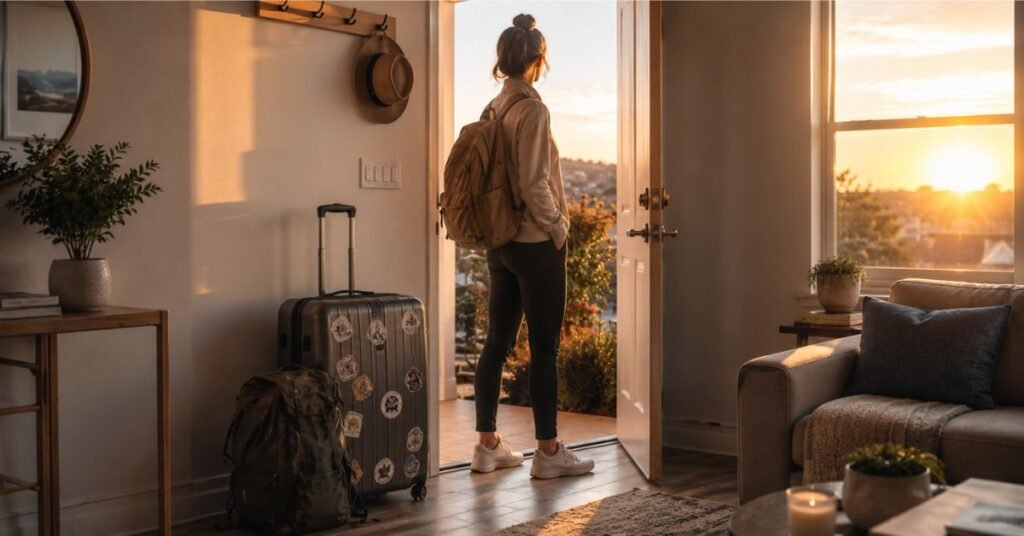
First time solo travelers are often unprepared for how strange coming home feels. You’ve changed. You’ve solved problems, made decisions, navigated the world entirely on your own terms. And then you walk back into your regular life and it feels oddly small.
- Give yourself a day or two to readjust before going back to full routine
- Write down your favorite memories before they fade
- Start planning the next trip — it helps with the post-travel dip
- Share your experience with people who are genuinely curious
- Be patient with people who don’t quite understand what you experienced
The post-travel feeling is real and it’s common. The best cure for it is simple: start planning trip number two. Because the best thing about your first solo trip is that it makes the second one feel inevitable.
| Category | Done? |
|---|---|
| Passport valid for 6+ months | ☐ |
| Travel insurance purchased | ☐ |
| First night accommodation booked | ☐ |
| Airport transport arranged | ☐ |
| Two payment cards packed | ☐ |
| Emergency cash separate | ☐ |
| Documents photographed | ☐ |
| Offline maps downloaded | ☐ |
| Someone has your itinerary | ☐ |
| Local SIM plan researched | ☐ |
Yes, millions of people do it every year. Choose beginner friendly destinations, use common sense, and develop simple safety habits from day one.
It depends on destination and style, but always budget 20% more than you think you need. Unexpected costs are part of every trip.
Loneliness happens but it passes. Stay in social accommodation, join group activities, and remember that being alone and being lonely are very different things.
Be selective. Tell trusted contacts your itinerary. With strangers, you don’t need to advertise that you’re completely alone — it’s fine to be vague.
Travel insurance documentation and a backup of your passport. Everything else can be bought. Those two things save trips.
Your first solo trip will not go perfectly. Something will go wrong, something will surprise you, and something will happen that you never could have planned for — in the best possible way.
These solo travel tips for first timers are not about making your trip perfect. They’re about making sure you’re prepared enough to handle whatever comes, confident enough to figure things out as you go, and open enough to let the experience be what it actually is.
Start with a forgiving destination. Pack light. Stay somewhere social. Keep your money safe. Trust yourself more than you think you should.
The world is genuinely good at welcoming people who show up to it alone. Go find that out for yourself.